Joint Design Manufacturer of

PWM Probe (20A)
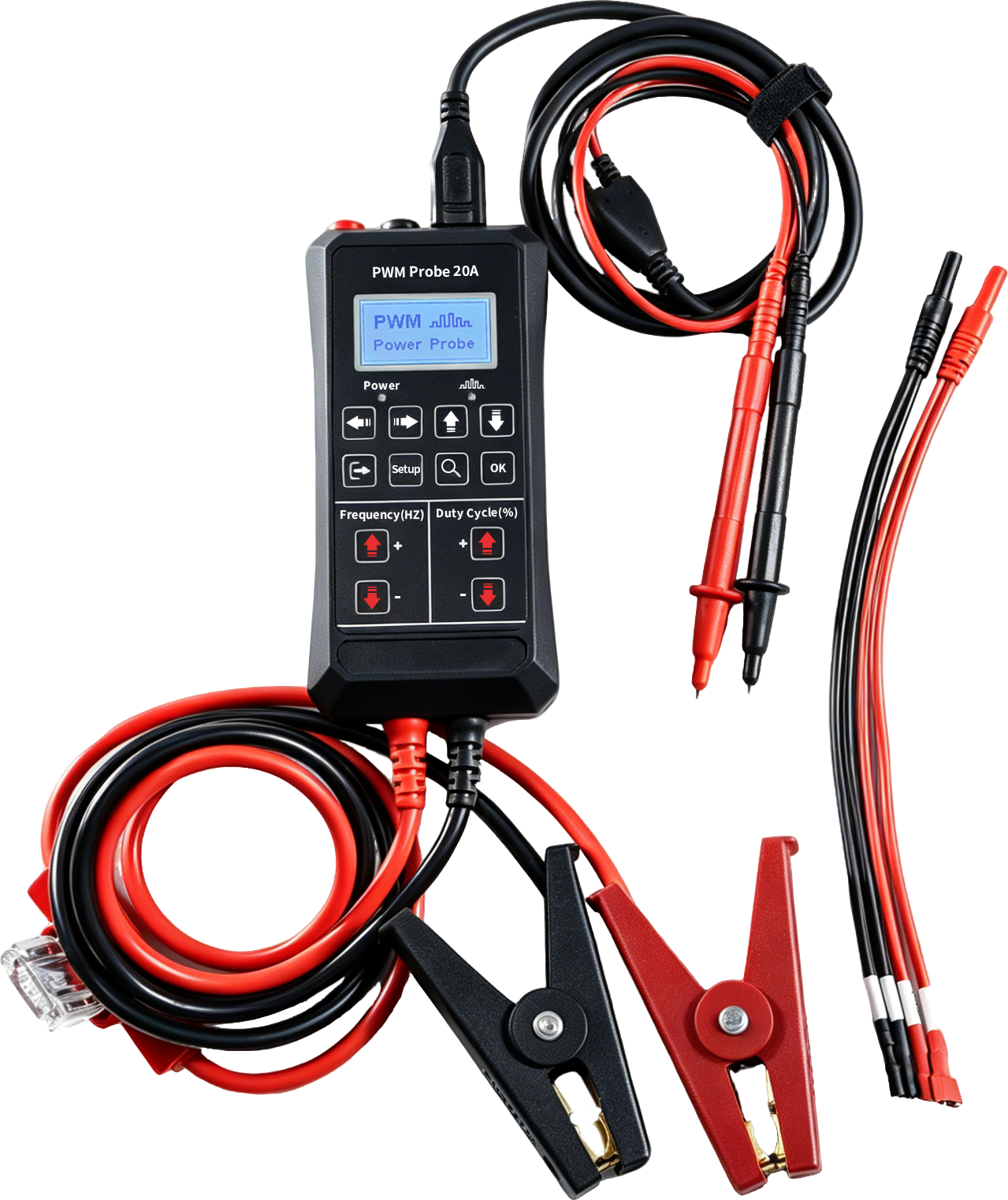
The Ultimate Tool for automotive electrical diagnostics!
Modern vehicles rely on sophisticated electronic solenoids, sensors, actuators, and PWM-controlled systems. Troubleshooting these components requires more than a multimeter. The PWM Probe 20A combines voltage testing, resistance measurement, direct power supply, and programmable PWM simulation into one rugged, intuitive tool. Whether you're a professional technician or a serious DIYer, this device saves time, reduces guesswork, and delivers reliable diagnostics every time.
Exclusive Invention
v Live Adjustable PWM – simulate real-world signals to test components under load.
Functions
1. Voltage Test – measures DC voltage up to 100V.
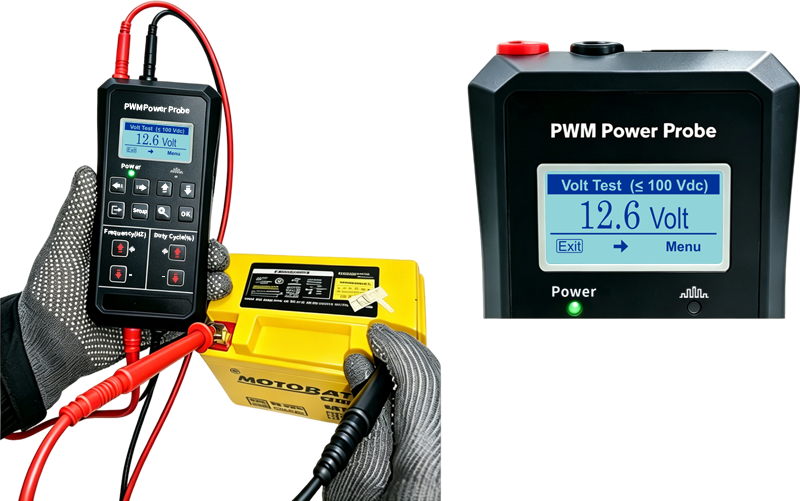
2. Resistance Test – three auto-ranging scales: 0.01Ω–20Ω, 0.1Ω–200Ω, 1Ω–2000Ω.
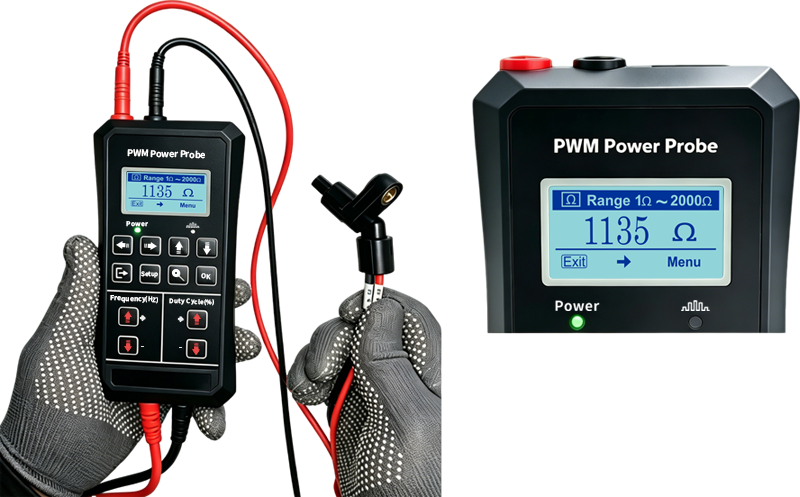
3. Direct 12V Power Feed – provides battery power for component testing.
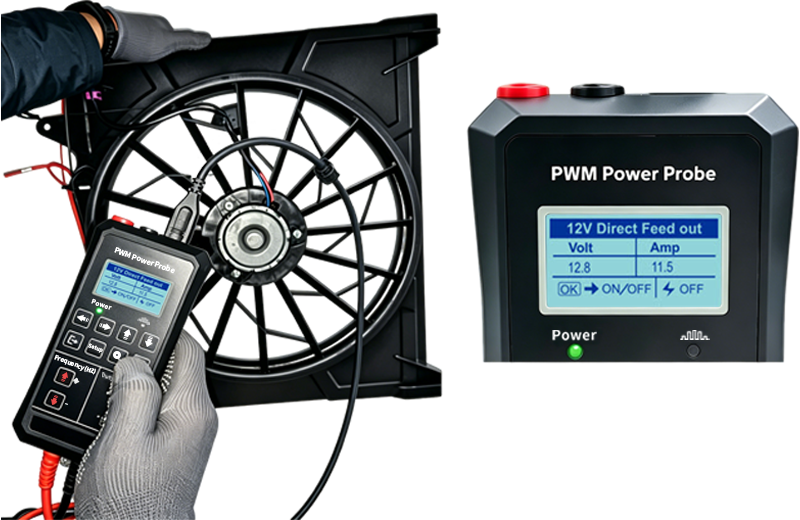
4. PWM Power Output – 12V, 20A max, adjustable frequency (7–1000Hz) and duty cycle (5–95%).
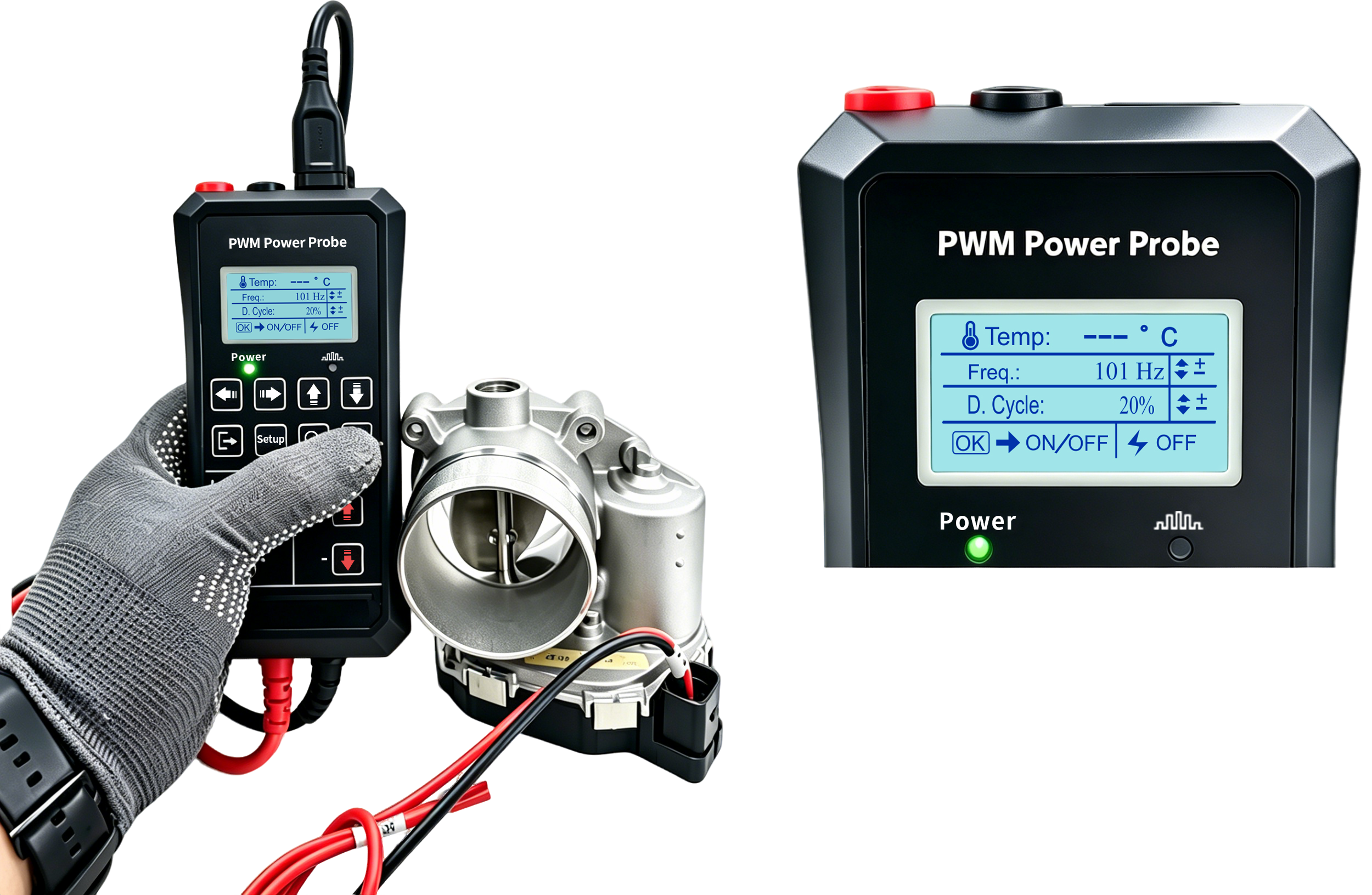
5. Timer Control Test – automated testing from 1 minute to 6 hours.
Features
v Reverse Polarity Protection – no damage if connected backwards.
v Self-Recovering PTC Fuse (20A) – automatically resets after a short-circuit event.
v Input Voltage Monitoring – audible alarm if battery voltage drops below 12V.
v Over-Voltage Protection – prevents damage during voltage measurement up to 100V DC.
v Automated Testing – set parameters and let the tool operates at with enabled timer-controlled solenoid tests.
v Data Logging – stores up to 100 test results for comparison and reporting.
v All-in-One Tool – replace multiple devices with one professional-grade unit.
v Data Memory – stores 100 test results with recall function.
v Temperature Monitoring – external sensor included (°C/°F selectable).
Benefits
For Professional Garages & Technicians:
v Faster Diagnostics: Quickly test fuel injectors, EVAP solenoids, boost control solenoids, and more without removing them.
v Accurate Simulation: Replicate OEM PWM signals (7–1000Hz, 5–95% duty cycle) to verify component operation.
v Prevent Comebacks: Use the timer test to stress-test components over time, ensuring they won’t fail shortly after repair.
v Professional Reporting: Store test results (T-001, T-002, etc.) to show customers proof of operation or failure.
For DIY & Enthusiasts:
v No More Guesswork: Easily check if a solenoid or sensor is working without expensive dealership tools.
v Learn & Experiment: Understand how PWM systems work by adjusting frequency and duty cycle in real-time.
v Safe & Protected: Built-in short-circuit and reverse-polarity protection prevent costly mistakes.
v One Tool, Many Uses: Use it as a power supply, voltmeter, ohmmeter, and signal generator.
Safety provisions
The PWM Power Probe is designed with multiple layers of protection and complies with international standards.
Frequently Asked Questions (FAQ)
Q1: Can this test fuel injectors?
A: Yes. Use PWM output mode to simulate the injector signals and measure current draw of a circuit.
Q2: Is it suitable for diesel systems?
A: Absolutely. It can test glow plug relays, EGR solenoids, and fuel pressure regulators.
Q3: How do I update the firmware?
A: The device is ready to use. Future update is not necessary.
Q4: What if I overload the output?
A: The PTC fuse will self-reset once the overload is removed and the unit cools.
Q5: Can I use it on 24V systems?
A: No. Input is designed for 12V only. Use a regulated 12V source if testing 24V vehicles.
